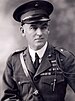
Incumbent General Glenn M. Walters since August 2, 2016
Formation
April 29, 1911
First holder
Eli K. Cole
The Assistant Commandant of the Marine Corps (ACMC) is the second highest-ranking officer in the United States Marine Corps, and serves as a deputy for the Commandant of the Marine Corps (CMC). Before 1946, the title was known as Assistant to the Commandant.
The Assistant Commandant is nominated for appointment by the President and must be confirmed via majority vote by the Senate. In the event that the Commandant is absent or is unable to perform his duties, the Assistant Commandant assumes the duties and responsibilities of the Commandant. For this reason, the Assistant Commandant is appointed to a rank equal to the sitting Commandant; since 1971, each Assistant Commandant has been, by statute, a four-star general, making it the most common rank held among Marines serving this position. Additionally, he may perform other duties that the CMC assigns to him.[1] Historically, the Assistant Comandant has served for two to three years. In recent decades, the Assistant Commandant has frequently been a Marine aviator. James F. Amos is the first aviator to serve as Assistant Commandant and then be promoted to Commandant.
The 34th and current Assistant Commandant is Glenn M. Walters,[2] who took office on 4 August 2016, when John M. Paxton Jr. retired. The first Marine to hold the billet as "Assistant to the Commandant" was Eli K. Cole (Allen H. Turnage being the last), while Lemuel C. Shepherd Jr. was the first to hold it as the "Assistant Commandant". Then–Lieutenant General Glenn M. Walters was nominated on 7 June 2016 to succeed Paxton as Assistant Commandant; at the time, he was serving as Deputy Commandant for Programs and Resources.[3]
Contents
1List of previous appointees
1.1Assistants to the Commandant of the Marine Corps
1.2Assistant Commandants of the Marine Corps
1.3Timeline
2See also
3References
List of previous appointees[edit]
Assistants to the Commandant of the Marine Corps[edit]
Before the official title of "Assistant Commandant of the Marine Corps" was adopted in 1946, the title of the position was known as the "Assistant to the Commandant" and before 1918, known only as "Duty in the Office of the Commandant". No records exist before the outbreak of World War I about this position, possibly because the Commandant likely had only administrative staff and no deputy.[4]
The first Assistant to the Commandant was Lieutenant Colonel (from 1914 Colonel) Eli K. Cole, who assumed the position on April 29, 1911. From April 29, 1911 to October 16, 1946, 19 men were assigned to assist the commandant, including five who later became Commandant: John A. Lejeune, Wendell C. Neville, Ben H. Fuller, John H. Russell Jr., and Alexander A. Vandegrift.[4]
#
Photo
Rank
Name
Tenure from
Tenure to
Became Commandant
1
O-05Colonel
Eli K. Cole[5]
April 29, 1911
January 1, 1915
No
2
O-07Brigadier General
John A. Lejeune[6]
January 1, 1915
September 10, 1917
Yes
3
O-07Brigadier General
Charles G. Long[7]
September 11, 1917
August 13, 1920
No
4
O-08Major General
Wendell Cushing Neville[8]
August 14, 1920
July 11, 1923
Yes
5
O-07Brigadier General
Logan Feland[9]
July 13, 1923
July 31, 1925
No
6
O-07Brigadier General
Dion Williams[10]
August 1, 1925
July 1, 1928
No
7
O-07Brigadier General
Ben Hebard Fuller[11]
July 2, 1928
July 8, 1930
Yes
8
O-07Brigadier General
John Twiggs Myers[12]
August 1, 1930
February 1, 1933
No
9
O-07Brigadier General
John H. Russell Jr.[13]
February 1, 1933
February 28, 1934
Yes
10
O-07Brigadier General
Douglas C. McDougal[14]
April 8, 1934
April 22, 1935
No
11
O-07Brigadier General
Louis M. Little[15]
April 22, 1935
May 6, 1937
No
12
O-06Brigadier General
Holland Smith[16]
April 1, 1939
September 25, 1939
No
13
O-07Brigadier General
Alexander Vandegrift[17]
March 1, 1940
November 18, 1941
Yes
14
O-07Brigadier General
Charles D. Barrett[18]
November 19, 1941
March 12, 1942
No
15
O-07Brigadier General
Ralph S. Keyser[19]
March 28, 1942
May 24, 1942
No
16
O-O8Major General
Harry Schmidt[20]
May 25, 1942
August 1, 1943
No
17
O-08Major General
Keller E. Rockey[21]
August 2, 1943
January 17, 1944
No
18
O-08Major General
Dewitt Peck[22]
January 20, 1944
July 30, 1945
No
19
O-08Major General
Allen H. Turnage[23]
September 1, 1945
October 16, 1946
No
Assistant Commandants of the Marine Corps[edit]
In 1946, Congress established the position of "Assistant Commandant of the Marine Corps" and since then, 31 men have held the position. Major General Lemuel C. Shepherd Jr. was the first to hold the billet and went on to become Commandant, as well as six others: Randolph M. Pate, Leonard F. Chapman Jr., Robert H. Barrow, Paul X. Kelley, James F. Amos and Joseph Dunford.[4]
As with the Commandant, the Assistant Commandant of the Marine Corps is appointed by the President based on advice and consent of the Senate and, once appointed, will be promoted to the grade of general. The duties of the Assistant Commandant include such authority and duties as the Commandant – and with the approval of the Secretary of the Navy – may delegate to or prescribe for him. Orders issued by the Assistant Commandant in performing such duties have the same effect as those issued by the Commandant. When there is a vacancy in the office of Commandant of the Marine Corps, or during the absence or disability of the Commandant, the Assistant Commandant shall perform the duties of the Commandant until a successor is appointed or the absence or disability ceases.[1]
#
Photo
Rank
Name
Tenure from
Tenure to
Became Commandant
1
O-08Major General
Lemuel C. Shepherd Jr.[24]
October 7, 1946
April 14, 1948
Yes
2
O-08Major General
Oliver P. Smith[25]
April 15, 1948
July 19, 1950
No
3
O-09Lieutenant General
Merwin H. Silverthorn[26]
July 19, 1950
February 1, 1952
No
4
O-09Lieutenant General
Gerald C. Thomas[27]
March 8, 1952
July 1, 1954
No
5
O-09Lieutenant General
Randolph M. Pate[28]
July 1, 1954
December 31, 1955
Yes
6
O-09Lieutenant General
Vernon E. Megee[29]
January 1, 1956
November 30, 1957
No
7
O-09Lieutenant General
Verne J. McCaul[30]
December 1, 1957
December 31, 1959
No
8
O-09Lieutenant General
John C. Munn[31]
January 1, 1960
March 31, 1963
No
9
O-09Lieutenant General
Charles H. Hayes[32]
April 1, 1963
June 30, 1965
No
10
O-09Lieutenant General
Richard C. Mangrum[33]
July 1, 1965
June 30, 1967
No
11
O-09Lieutenant General
Leonard F. Chapman Jr.[34]
July 1, 1967
December 31, 1967
Yes
12
O-10General
Lewis William Walt[35]
January 1, 1968
January 29, 1971
No
13
O-10General
Keith B. McCutcheon[36]
January 30, 1971
March 11, 1971 (never assumed post due to illness)
Help:Category From Wikipedia, the free encyclopedia Jump to navigation Jump to search For guidelines on the use of categories in Wikipedia, see Wikipedia:Categorization. For a basic readers' guide see Help:Categories. For quick answers, see the readers' FAQ or the editors' FAQ on categories. For a list of categories, see Special:Categories. This is an information page. It describes the editing community's established practice on some aspect or aspects of Wikipedia's norms and customs. It is not one of Wikipedia's policies or guidelines, as it has not been thoroughly vetted by the community. Shortcut H:CAT Wikipedia data structure Namespaces Subject namespaces Talk namespaces 0 (Main/Article) Talk 1 2 User User talk 3 4 Wikipedia Wikipedia talk 5 6 File File talk 7 8 MediaWiki MediaWiki talk 9 10 Template Template talk 11 12 Help Help talk 13 14 Category Category talk 15 100 Portal Portal talk 101 108 Book Book tal...
Clash Royale CLAN TAG #URR8PPP Graham Southern (born 21 September 1960) [1] is an English art dealer and gallery owner. In 1994, Southern was the Founding Director of Christie's (London) Post-War & Contemporary Art Department which he ran until 2001, leaving to become a director of the Anthony d'Offay Gallery. In 2002, he founded Haunch of Venison gallery with Harry Blain. [2] The gallery represented, amongst others, Turner Prize winners Richard Long and Keith Tyson. In 2007, Blain and Southern sold Haunch of Venison [3] [4] to Christie's International plc. Southern remained within the business and continued to run the gallery with Blain when they both left to launch BlainSouthern in 2010. The gallery was originally based at 21 Dering Street, but moved to 4 Hanover Square in October 2012. Together with Blain, Southern staged many acclaimed exhibitions while at Haunch of Venison, including major surveys of Abstract Expressionism [5] and late twentieth century Russi...
.everyoneloves__top-leaderboard:empty,.everyoneloves__mid-leaderboard:empty margin-bottom:0; up vote 0 down vote favorite I had a flight for my home country (Pakistan) in the last few days. On the day before the departure, while going to the airport, I lost all my documents, including my passport and the Italian Residence Permit (Permesso di Soggiorno). I filed a loss report with the police. As I need to visit my country, the police advised me to get a temporary travel document from my consulate and leave Italy. Now, what are the possible ways to fly back to Italy? What would be the requirements? Is it hard to get it or not a big deal? It may be further noted that the documents were lost in Italy and the police report was also issued here. Also, the lost Permesso di Soggiorno is valid. I applied for a replacement. I have the receipt from the post office too. Now I want to come back to Italy. I would appreciate comments from people who had similar scenarios or have know-how ...